The Outsider Who Exposed the Leisure Class
The Life and Work of Thorstein Veblen

The Son of Peasants
Veblen Thorstein didn't theorize about the leisure class by reading books in a library; he theorized it while watching h
Conspicuous Leisure
There, sleeping in borrowed rooms, with inherited clothes, and speaking a strange English with an accent everyone mocked
The Theory of the Leisure Class
From that wound of contempt in his purely biographical but completely obvious analysis, the conceptual hammer of his wor
Productive vs Honorific Work
On the contrary, honorific work is the task that produces absolutely nothing, but it shows that the person performing it
A Calvary of Expulsions
That's why Veblen's academic life was a Calvary of expulsions and precariousness. He got his doctorate at Yale, but the
Conspicuous Consumption
In that voluntary exile, he developed his most eloquent and tragic finding: pecuniary emulation and conspicuous consumpt
The Poison of Emulation
Veblen discovered that the laborer or the middle-class guy, instead of being against the leisure class, rather seeks to
Death and Vindication
Veblen died alone in a cabin in Palo Alto in 1929, clearly in poverty, months before the 1929 Crash vindicated his diagn
The Question Veblen Leaves Us
Do you want to be and be debt-free? Or do you want enough money to go from victim to exploiter? Do you want the giant tr
Reading this on the screen of a smartphone you still owe money on, and that you always leave face up on the table so the logo is visible. You bought that designer flannel shirt to go to the corner and take a photo at the gym just to show that you train and exercise. Uff, that's the testament to two free hours a day for doing nothing.
Well, I'm sorry to inform you that you are paying for the most expensive subjectivity of the modern era: the right for others to believe that you belong to the class that doesn't need to work to live.
And that neurotic need to show that you don't work, that you don't get your hands dirty, and that you don't need to. An outsider discovered it in 1874 while cleaning the grime from the bathrooms of the rich.
The Son of Peasants
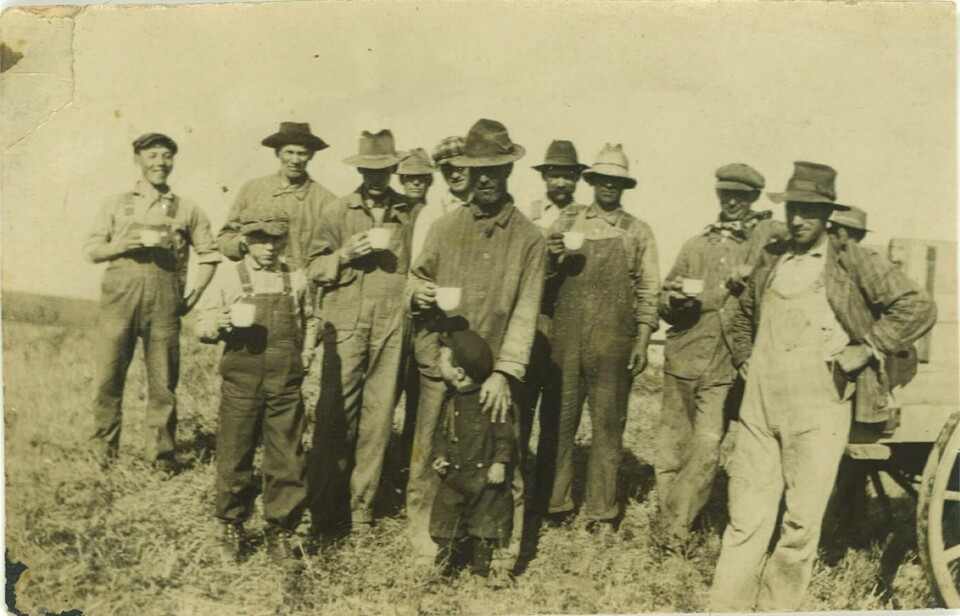
Veblen Thorstein didn't theorize about the leisure class by reading books in a library; he theorized it while watching his university classmates from the attic where he lived, while the others indulged in the luxury of doing nothing.
Veblen, son of Thomas and Kari, two Norwegian peasants who crossed the Atlantic in 1857 to break stones in Wisconsin and work sixteen hours a day so their 12 children wouldn't starve.
Veblen entered Carleton College not as the heir to a fortune, but as the living embodiment of the peasant anomaly that the system barely tolerated only in the dark corners.
Conspicuous Leisure
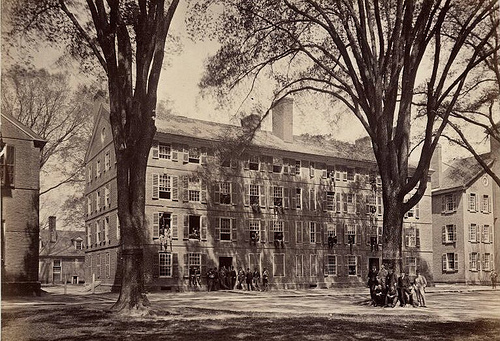
There, sleeping in borrowed rooms, with inherited clothes, and speaking a strange English with an accent everyone mocked, Veblen discovered the first pillar of his work: conspicuous leisure.
He saw the sons of rich industrialists studying Greek, Latin, philosophy, and fencing. Disciplines whose only value lies in being as useless as possible for producing a single kilo of wheat in their time.
That dissonance of seeing a rich guy wasting four years of his life studying a dead language was the epitome of absurdity, and suddenly he understood something.
What is the elite seeking by studying something that is useless? Knowledge?
Well, apparently not. Only the certification that they belonged to a caste so rich, so exempt from hard manual labor, that they could afford to waste time.
The peasant effort of his parents to cultivate the land was seen as vulgar. The uselessness of the rich, on the other hand, was revered as culture.
The Theory of the Leisure Class

From that wound of contempt in his purely biographical but completely obvious analysis, the conceptual hammer of his work, The Theory of the Leisure Class, was born in 1899.
Beyond the fact that our good outsider friend had a considerable repulsion, supported by the obvious, we must distinguish his concepts and demonstrate what the distinction between productive work and honorific work was based on.
Veblen understood that capitalism does not reward those who touch matter, such as picking up a pickaxe and shovel and getting a few blisters on their hands. Or those who fix an engine, harvest soybeans, build a wall, or cure a disease. See also education and the people who collect and dispose of our daily waste in a truck, useful people, because work that produces tangible things stains the hands, betrays an urgency to be able to eat, and therefore condemns the subject to social contempt. And the paradox is merely abstract and totally subjective, completely installed in the ideological collective.
In simple terms: if your work is useful and accomplishes something, but requires physical effort, for example, using your hands to produce it, it betrays that it is an effort, and therefore it is seen as outrageous.
Productive vs Honorific Work
On the contrary, honorific work is the task that produces absolutely nothing, but it shows that the person performing it is so high, and I mean so, at the top of the pyramid that they can afford to live off the useless.
In Veblen's youth, it was the priest who didn't harvest but, mind you, judged you, or the cavalry officer who never stepped into the mud of the front lines. See it as a commander giving orders from a desk.
Today it could be a consultant, the broker who sees you from the course, workshop, or seminar they teach you. Which apparently is very profitable because everyone takes you to the course, the life coach, the brand analyst, or the finance influencer.
The more useless and unproductive your function, the higher your salary and the greater your prestige.
Society pays you millions to reward your ability to exempt yourself from real work.
A Calvary of Expulsions
That's why Veblen's academic life was a Calvary of expulsions and precariousness. He got his doctorate at Yale, but the East Coast university system discarded and spat him out. No institution wanted him because he carried the label that didn't fit the system. He was poor, foreign, agnostic, a womanizer, and he didn't hide his disgust for the bourgeoisie that employed him.
They kicked him out of Chicago, they kicked him out of Stanford. While well-off intellectuals crafted speeches to justify the privileges of railroad magnates, Veblen taught classes in Missouri on a borrowed desk, demonstrating that his own indigence was the price for refusing to perform honorific work in service of power.
Conspicuous Consumption

In that voluntary exile, he developed his most eloquent and tragic finding: pecuniary emulation and conspicuous consumption. Veblen saw and discovered that the tragedy of the working class, besides being exploited, also harbored a servile desire to imitate their exploiters.
Conspicuous consumption is not buying expensive things to enjoy them, but rather spending on uselessly expensive things to show the neighbor that you can burn money.
A fifty thousand dollar watch that runs slow is worth more than a digital one that tells the exact time, because the one that runs slow materially certifies that you don't care about time, because, well, those who measure time are the employees. And emulation is the poison that guarantees the pyramid never falls.
The Poison of Emulation
Veblen discovered that the laborer or the middle-class guy, instead of being against the leisure class, rather seeks to imitate it to have the right to step on those a rung below.
The guy who earns a basic salary and goes into debt for eighteen installments to have the same cell phone as the businessman, a phone that performs the same functions as a cheap one, is actually no longer seeking to communicate. You know it, the one who buys it knows it, and the company that sells it knows it too. What that individual seeks is for the neighbor who earns a little less than him to look at him with envy.
The voluntary servitude of those below finances the throne of those above. A paradox found in any corner of the planet. The one who spends twelve hours in a greasy mechanic's shop sees himself as a worker without a future. Meanwhile, the son of the farm owner, who spent two years at a private university studying violin, returns speaking corporate English, doesn't touch a tool in his life, and does live streams about entrepreneurial spirit.
That is the leisure class in its purest state, that of the heir of one who did not work because he prayed and that of the feudal lord who did not work because he owned. Today, both pray with words like disruption, resilience, and perseverance, but the logic is the same: the more abstract and useless your connection to reality, the higher you are in the consideration of others, the more useless and unproductive you probably are.
Death and Vindication

Veblen died alone in a cabin in Palo Alto in 1929, clearly in poverty, months before the 1929 Crash vindicated his diagnosis of parasitic speculation.
He expressly asked that he not be given a funeral and that all his papers be burned, as if he wanted to erase any trace of having belonged to a world he detested. His life was a living demonstration of his own theory: in a society formed on the cult of the parasite, the productive guy, the one who tells the truth and the one who works with his hands is always slowly pushed to the darkest margins.
That's why you feel that guilt at the end of your workday. No matter how much you break your back, you will never achieve the status of someone who produces nothing, because within the mentality we inherited, working is the ultimate proof of your defeat.
The Question Veblen Leaves Us
Do you want to be and be debt-free? Or do you want enough money to go from victim to exploiter? Do you want the giant truck to transport cargo or to blind the old car coming ahead with its high beams? Do you want the gated community for security or, for the guard to ask for the ID of the same guys you went to primary school with?
The question that Veblen's life and work leaves us with is not how wealth is redistributed. What I'm saying is: What kind of moral deformity do we construct when we turn effort into shame and parasitism into the only proof that you are alive?
It's true that the corrupt politician or the tax-evading businessman makes us angry, but deep down it seems that we are much more outraged and bothered by not being the ones on the side of those who don't have to account for anything.
Transcript
Reading this on the screen of a smartphone you still owe money on, and that you always leave face up on the table so the logo is visible. You bought that designer flannel shirt to go to the corner and take a photo at the gym just to show that you train and exercise. Uff, that's the testament to two free hours a day for doing nothing. Well, I'm sorry to inform you that you are paying for the most expensive subjectivity of the modern era: the right for others to believe that you belong to the class that doesn't need to work to live. And that neurotic need to show that you don't work, that you don't get your hands dirty, and that you don't need to. An outsider discovered it in 1874 while cleaning the grime from the bathrooms of the rich. The Son of Peasants Veblen Thorstein didn't theorize about the leisure class by reading books in a library; he theorized it while watching his university classmates from the attic where he lived, while the others indulged in the luxury of doing nothing. Veblen, son of Thomas and Kari, two Norwegian peasants who crossed the Atlantic in 1857 to break stones in Wisconsin and work sixteen hours a day so their 12 children wouldn't starve. Veblen entered Carleton College not as the heir to a fortune, but as the living embodiment of the peasant anomaly that the system barely tolerated only in the dark corners. Conspicuous Leisure There, sleeping in borrowed rooms, with inherited clothes, and speaking a strange English with an accent everyone mocked, Veblen discovered the first pillar of his work: conspicuous leisure. He saw the sons of rich industrialists studying Greek, Latin, philosophy, and fencing. Disciplines whose only value lies in being as useless as possible for producing a single kilo of wheat in their time. That dissonance of seeing a rich guy wasting four years of his life studying a dead language was the epitome of absurdity, and suddenly he understood something. What is the elite seeking by studying something that is useless? Knowledge? Well, apparently not. Only the certification that they belonged to a caste so rich, so exempt from hard manual labor, that they could afford to waste time. The peasant effort of his parents to cultivate the land was seen as vulgar. The uselessness of the rich, on the other hand, was revered as culture. The Theory of the Leisure Class From that wound of contempt in his purely biographical but completely obvious analysis, the conceptual hammer of his work, The Theory of the Leisure Class, was born in 1899. Beyond the fact that our good outsider friend had a considerable repulsion, supported by the obvious, we must distinguish his concepts and demonstrate what the distinction between productive work and honorific work was based on. Veblen understood that capitalism does not reward those who touch matter, such as picking up a pickaxe and shovel and getting a few blisters on their hands. Or those who fix an engine, harvest soybeans, build a wall, or cure a disease. See also education and the people who collect and dispose of our daily waste in a truck, useful people, because work that produces tangible things stains the hands, betrays an urgency to be able to eat, and therefore condemns the subject to social contempt. And the paradox is merely abstract and totally subjective, completely installed in the ideological collective. In simple terms: if your work is useful and accomplishes something, but requires physical effort, for example, using your hands to produce it, it betrays that it is an effort, and therefore it is seen as outrageous. Productive vs Honorific Work On the contrary, honorific work is the task that produces absolutely nothing, but it shows that the person performing it is so high, and I mean so, at the top of the pyramid that they can afford to live off the useless. In Veblen's youth, it was the priest who didn't harvest but, mind you, judged you, or the cavalry officer who never stepped into the mud of the front lines. See it as a commander giving orders from a desk. Today it could be a consultant, the broker who sees you from the course, workshop, or seminar they teach you. Which apparently is very profitable because everyone takes you to the course, the life coach, the brand analyst, or the finance influencer. The more useless and unproductive your function, the higher your salary and the greater your prestige. Society pays you millions to reward your ability to exempt yourself from real work. A Calvary of Expulsions That's why Veblen's academic life was a Calvary of expulsions and precariousness. He got his doctorate at Yale, but the East Coast university system discarded and spat him out. No institution wanted him because he carried the label that didn't fit the system. He was poor, foreign, agnostic, a womanizer, and he didn't hide his disgust for the bourgeoisie that employed him. They kicked him out of Chicago, they kicked him out of Stanford. While well-off intellectuals crafted speeches to justify the privileges of railroad magnates, Veblen taught classes in Missouri on a borrowed desk, demonstrating that his own indigence was the price for refusing to perform honorific work in service of power. Conspicuous Consumption In that voluntary exile, he developed his most eloquent and tragic finding: pecuniary emulation and conspicuous consumption. Veblen saw and discovered that the tragedy of the working class, besides being exploited, also harbored a servile desire to imitate their exploiters. Conspicuous consumption is not buying expensive things to enjoy them, but rather spending on uselessly expensive things to show the neighbor that you can burn money. A fifty thousand dollar watch that runs slow is worth more than a digital one that tells the exact time, because the one that runs slow materially certifies that you don't care about time, because, well, those who measure time are the employees. And emulation is the poison that guarantees the pyramid never falls. The Poison of Emulation Veblen discovered that the laborer or the middle-class guy, instead of being against the leisure class, rather seeks to imitate it to have the right to step on those a rung below. The guy who earns a basic salary and goes into debt for eighteen installments to have the same cell phone as the businessman, a phone that performs the same functions as a cheap one, is actually no longer seeking to communicate. You know it, the one who buys it knows it, and the company that sells it knows it too. What that individual seeks is for the neighbor who earns a little less than him to look at him with envy. The voluntary servitude of those below finances the throne of those above. A paradox found in any corner of the planet. The one who spends twelve hours in a greasy mechanic's shop sees himself as a worker without a future. Meanwhile, the son of the farm owner, who spent two years at a private university studying violin, returns speaking corporate English, doesn't touch a tool in his life, and does live streams about entrepreneurial spirit. That is the leisure class in its purest state, that of the heir of one who did not work because he prayed and that of the feudal lord who did not work because he owned. Today, both pray with words like disruption, resilience, and perseverance, but the logic is the same: the more abstract and useless your connection to reality, the higher you are in the consideration of others, the more useless and unproductive you probably are. Death and Vindication Veblen died alone in a cabin in Palo Alto in 1929, clearly in poverty, months before the 1929 Crash vindicated his diagnosis of parasitic speculation. He expressly asked that he not be given a funeral and that all his papers be burned, as if he wanted to erase any trace of having belonged to a world he detested. His life was a living demonstration of his own theory: in a society formed on the cult of the parasite, the productive guy, the one who tells the truth and the one who works with his hands is always slowly pushed to the darkest margins. That's why you feel that guilt at the end of your workday. No matter how much you break your back, you will never achieve the status of someone who produces nothing, because within the mentality we inherited, working is the ultimate proof of your defeat. The Question Veblen Leaves Us Do you want to be and be debt-free? Or do you want enough money to go from victim to exploiter? Do you want the giant truck to transport cargo or to blind the old car coming ahead with its high beams? Do you want the gated community for security or, for the guard to ask for the ID of the same guys you went to primary school with? The question that Veblen's life and work leaves us with is not how wealth is redistributed. What I'm saying is: What kind of moral deformity do we construct when we turn effort into shame and parasitism into the only proof that you are alive? It's true that the corrupt politician or the tax-evading businessman makes us angry, but deep down it seems that we are much more outraged and bothered by not being the ones on the side of those who don't have to account for anything.